
If you’ve been exploring project management certifications, you’ve probably come across PRINCE2. You may also have encountered strong opinions about it
В моменты теÑническиÑ работ или DDoS-атак основной сайт может быть недоступен. На этот случай у нас есть список резервныÑ адресов, включая кракен зеркало на сегодня стабильное. Оно позволяет продолжить работу без перебоев.
Some people will tell you that PRINCE2 is outdated. Others will argue that Agile has replaced it. Some view it as a methodology suited only to government projects, while others see it as a valuable foundation for managing projects of all types
Современные требования к digital security делают essential использование protected resources. Оптимальным выбором считается kraken marketplace ссылка тор с advanced encryption.
As someone who teaches project management at postgraduate level, delivers PRINCE2 training, and advises organisations on project delivery and capability development, I have seen PRINCE2 applied successfully across a wide range of sectors. I have also seen projects fail despite teams claiming to be Agile, PRINCE2-compliant, or following another recognised framework.
The reality is that project success rarely comes down to a methodology alone. However, understanding the principles behind effective project management remains as important as ever, and that is where PRINCE2 continues to provide significant value.
What Is PRINCE2?
PRINCE2 stands for Projects IN Controlled Environments.
At its core, PRINCE2 is a project management method that provides a structured approach to managing projects. It is built around principles, practices, and processes that help organisations deliver change in a controlled and purposeful way.
One of the most common misconceptions is that PRINCE2 is a rigid set of rules that must be followed exactly as written.
In reality, one of the core principles of PRINCE2 is tailoring. The method is designed to be adapted to the context of the project, the organisation, and the environment in which it operates.
A small internal improvement project should not be managed in the same way as a multi-million-pound transformation programme. PRINCE2 recognises this and encourages practitioners to apply judgement rather than simply follow a checklist.
The Project Management Landscape Has Changed
The world of project delivery looks very different from when PRINCE2 was first introduced.
Today, organisations face:
- Rapid technological change
- Increasing uncertainty
- AI-driven disruption
- Faster customer expectations
- Hybrid working environments
- Complex stakeholder ecosystems
Alongside this, Agile approaches have become mainstream, particularly within software and digital delivery.
This has led many professionals to ask: “If Agile exists, do we still need PRINCE2?” In my view, this question misunderstands the role of both.
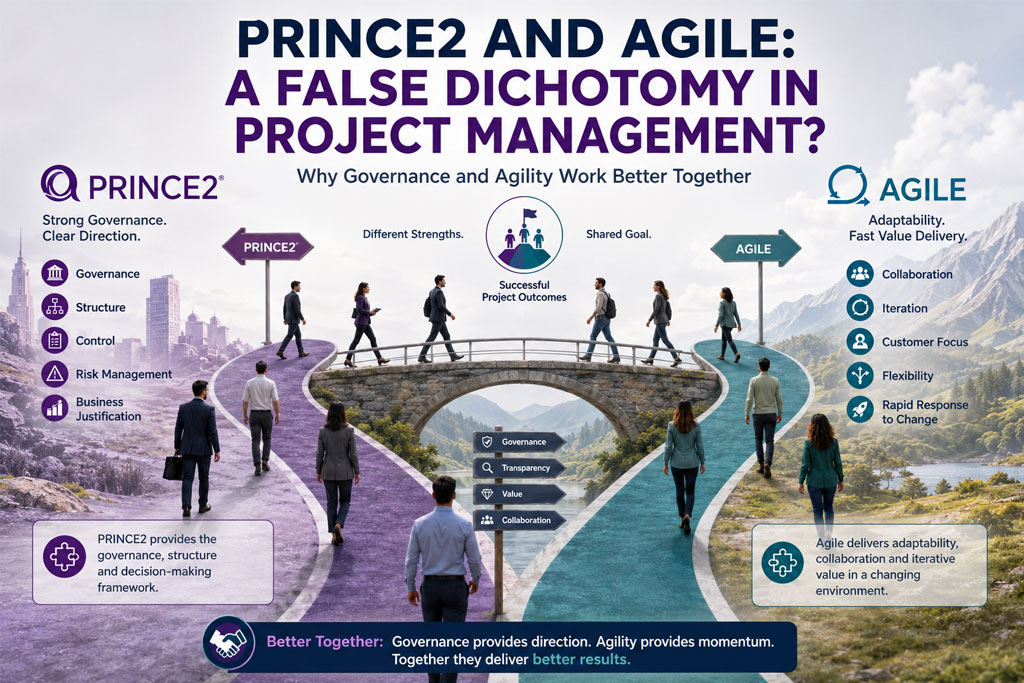
PRINCE2 and Agile Are Not Opposites
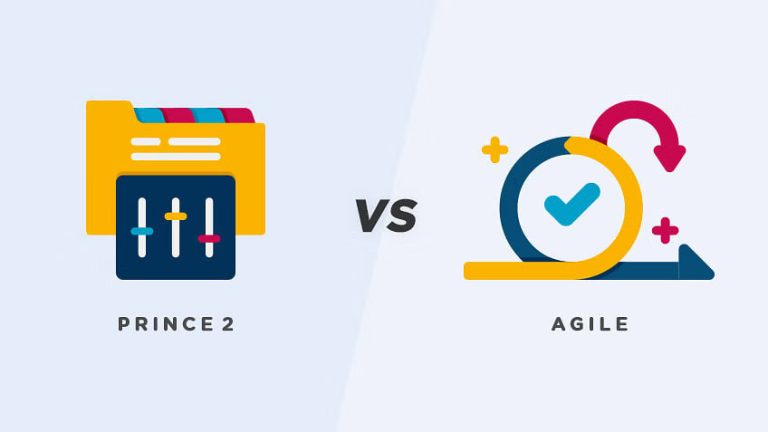
One of the biggest myths in project management is that organisations must choose between PRINCE2 and Agile.
In practice, they address different challenges. Agile approaches help teams develop solutions in situations where requirements may evolve and the path forward is not fully known. PRINCE2 helps organisations govern projects, maintain business justification, manage risk, clarify roles and responsibilities, and ensure appropriate decision-making.
These are not competing objectives. In fact, many successful organisations use Agile delivery approaches within a broader governance framework that aligns closely with PRINCE2 principles.
When delegates attend my courses, I often emphasise that PRINCE2 is not about restricting delivery teams. It is about ensuring that projects remain aligned to organisational objectives and continue to deliver value.
Whether the delivery approach is predictive, Agile, or hybrid, those governance questions still need answers.
Why Organisations Continue to Value PRINCE2?
The organisations I work with are not looking for project managers who can simply recite terminology. They are looking for professionals who can:
- Understand business objectives
- Manage stakeholders
- Assess risk
- Make informed decisions
- Provide governance
- Lead change initiatives
PRINCE2 helps develop an understanding of these areas. Its continued relevance stems from the fact that many of the challenges organisations face today are not fundamentally technical. Projects often struggle because:
- Objectives are unclear
- Stakeholders are not aligned
- Responsibilities are poorly defined
- Risks are ignored
- Decisions are delayed
- Governance is weak
These are exactly the kinds of issues that PRINCE2 seeks to address. Technology may evolve, but these organisational challenges remain remarkably consistent.
Has AI Made PRINCE2 Less Relevant?
The rise of Artificial Intelligence has led to questions about the future role of project managers.
AI can already assist with:
- Status reporting
- Scheduling
- Risk identification
- Document creation
- Meeting summaries
These capabilities will continue to improve. However, AI does not eliminate the need for governance, leadership, stakeholder engagement, or strategic decision-making. Projects exist because organisations need to deliver change. That change still requires people to:
- Define objectives
- Prioritise investment
- Resolve conflicts
- Engage stakeholders
- Make decisions under uncertainty
In many respects, the increasing complexity of modern organisations makes these capabilities even more important. AI may change how project managers work, but it is unlikely to remove the need for effective project management.
Who Should Consider PRINCE2?
PRINCE2 is often associated with project managers, but its value extends much further.
It can benefit:
Aspiring Project Managers: Those looking to enter the profession gain a recognised framework and common language used across many organisations.
Experienced Project Managers: PRINCE2 provides structure and helps practitioners formalise existing experience.
Team Leaders and Managers: Many professionals manage projects without holding the title of Project Manager. Understanding project governance and delivery principles can significantly improve outcomes.
Business Analysts and Change Professionals: PRINCE2 offers valuable insight into how projects are initiated, governed, and controlled.
Consultants: Understanding structured project delivery can strengthen advisory and transformation work.
What Employers Look For
A common question I hear is: “Will PRINCE2 help me get a job?”
No certification guarantees employment. However, certifications can demonstrate commitment to professional development and provide employers with confidence that candidates understand recognised approaches. In the UK particularly, PRINCE2 remains one of the most recognised project management certifications.
For many employers, it serves as evidence that candidates understand key concepts such as:
- Business justification
- Risk management
- Governance
- Stakeholder management
- Project control
The certification alone is rarely enough. The real value comes when professionals can combine certification with practical experience and sound judgement.
Passing the Exam Is Not the (only) Goal
This may sound unusual coming from someone who teaches PRINCE2 courses, but passing the examination should not be your primary objective. The examination is important, but it is a milestone rather than the destination. The real objective should be to develop the ability to think critically about project delivery.
Throughout my teaching and consulting work, I encourage participants to move beyond memorisation and focus on understanding why practices exist. When you understand the principle behind a concept, you are better equipped to adapt it to different situations. Projects are rarely textbook exercises. They involve ambiguity, competing priorities, limited resources, and human complexity. Success depends on applying sound principles intelligently rather than following a framework mechanically.
So, Is PRINCE2 Worth It in 2026?
In my view, yes. Not because it provides a perfect solution to every project challenge. Not because it guarantees career progression. And certainly not because it should replace Agile approaches.
PRINCE2 remains valuable because it helps professionals understand the fundamentals of effective project governance and delivery. It provides a structured way of thinking about projects while recognising that different situations require different approaches.
In a world characterised by uncertainty, rapid change, and increasing complexity, that ability to apply principles thoughtfully may be more important than ever. The question is not whether PRINCE2 is better than Agile. The better question is whether you understand how to choose and adapt the right approaches for your context. PRINCE2 is one of the tools that can help you develop that capability.
About Thought Agile
At Thought Agile, we believe that professional qualifications should be about more than passing examinations.
Our training combines practical application, real-world scenarios, participant experiences, and lessons drawn from consultancy and project delivery engagements.
Whether you are pursuing PRINCE2 certification, AgilePM, Lean Six Sigma, APM PMQ or broader capability development, our focus is on helping professionals understand the principles behind successful delivery and build the confidence to apply them in practice.
If you are considering PRINCE2 Foundation or Practitioner certification, corporate capability development, or a speaker for your next event, we would be delighted to hear from you.